
Code Violations · Vacant Properties · No Repairs Required
Sell a House With Code Violations or a Vacant Property in California — As-Is
Red tags. City deadlines. A house sitting empty. No matter the situation, get a straightforward cash exit without repairs, permits, or stress.
The Code Violation & Vacant Property Playbook
Every California Homeowner Needs
Code violations are scary because they're vague. Vacant homes bleed value in slow motion. Whether you're dealing with city notices or an empty property — your first move is control, not panic.
Identify What Agency Is Involved
Different agency = different process. Know who you're dealing with:
Your City Planning Department
Zoning, land use, and permitted use violations
Your Building / Housing Inspection Dept.
Building code, housing code, and safety violations
Your City's Code Enforcement
Municipal code, property maintenance, and nuisance complaints
Your County Enforcement Agency
County-level code enforcement and unincorporated area violations
What a Notice of Violation Triggers
Planning Department Notices
Owners typically must respond within a short timeframe. Escalation can include penalties and recording an Order of Abatement after an NOV becomes final.
Building / Housing Code Notices
Inspectors issue an NOV describing violations and required corrective actions. Failure to comply leads to escalating enforcement.
Municipal Code Enforcement
Owners can often appeal a Notice of Violation and request a compliance extension—but the window is typically narrow.
The real danger is escalation: deadlines, penalties, abatement, and liens that can cloud title and complicate any sale.
Your 72-Hour "Control the Situation" Checklist
Don't panic. Get organized in 72 hours:
If It's Vacant: Stabilize in 48 Hours
Vacant homes bleed value in slow motion. The damage isn't always dramatic—it's insurance gaps, unnoticed leaks, and costs stacking.
Vacancy Tax Pressure You Can't Ignore
Vacant Property Taxes
Many California cities now impose vacancy taxes or fees. Some define "vacant" as in use less than 50 days in a calendar year, with annual penalties and specific exemption rules.
Empty Homes Ordinances
Vacancy policies are city-specific and change frequently. Some have been challenged in court. The rules in your city may be different from the next one over.
Translation: if you're sitting on a vacant house, you don't "assume"—you verify.
The Carrying Cost Stack (What Owners Forget)
Vacancy is rarely neutral. It's usually negative:
Every day the fines grow. Every week the stress compounds.
Choose One of Three Adult Options
A) Fix It Properly
Best when scope is manageable and you want to keep, finance, or refi.
B) Legalize / Retro-Permit
Best when unpermitted work is common (conversions, units, additions).
C) Sell As-Is With Full Disclosure
Best when time is expensive and you want certainty.
"Don't Get Burned" Mistakes
Ignoring notices until it becomes a lien problem
Hiring a contractor who doesn't understand permitting
Starting work without a plan that matches the city's requirements
Thinking it's "minor" until abatement or title issues hit
Leaving utilities off in a way that causes property damage
Letting exterior go (neighbors report, city notices happen)
Ignoring insurance vacancy terms
Waiting for "the perfect time" while costs stack
Get the Free Code Violation & Vacant Property Checklist
We'll show you two nets side-by-side: your likely net if you fix and list (after permits, repairs, time) vs. net if you sell as-is (fast, certain). No fairy-tale price—just clean options so you can choose.
Code Violations. Vacant Houses. No Clear Path.
The letter from the city arrived. Now there's a deadline you didn't ask for.
Or maybe the house has been sitting vacant for months — and costs are stacking up.
Maybe it's unpermitted work from a previous owner. Maybe it's an addition you did years ago.
The estimates to fix it are staggering. The permit process is a maze.
Every day the fines grow. Every week the vacancy costs compound.
You can't sell through traditional channels — buyers walk when they see violations or a vacant home.
You just want out, but there's no obvious path forward.
Whether it's citations or a property sitting empty, there's a way through this that doesn't require fixing everything — or understanding the permit system.
Understanding Your Situation
You Want the Problem Off Your Plate
Living under the weight of code violations, a vacant house, or mounting carrying costs is exhausting. Relief comes from transferring that burden to someone who knows how to handle it.
We Specialize in Problem Properties
Code violations, unpermitted work, red tags, long-vacant homes — these are challenges we navigate every week. We evaluate the cost and risk and make fair cash offers.
Every Day Costs You More
Code enforcement fines don't stop. Vacant properties bleed money through taxes, insurance, utilities, and security risk. Acting sooner limits your total exposure.
Your Options, Side by Side
Real numbers. Real timelines. No surprises.
| Comparison | List Traditionally | Fix Then List | Sell As-Is for Cash |
|---|---|---|---|
| Timeline | 4-12+ months (after fixing violations or occupying the home) | 6-18+ months | 7-21 days, violations and vacancy transfer to buyer |
| Upfront Costs | $30k-100k+ to resolve violations or prepare vacant home | $40k-150k+ (violations + renovations + carrying costs) | Zero — we assume all risk and costs |
| Stress & Coordination | Extremely high — permits, contractors, re-inspections | Maximum — complex multi-phase project | Minimal — one walkthrough, done |
| Repairs & Cleanout | All violations must be resolved; vacant homes need prep | Full violation resolution plus market-ready updates | None required, we take it as-is regardless of condition |
| Certainty | Uncertain — permit process and vacant-home staging unpredictable | Very uncertain — many points of failure | Guaranteed cash, clean exit |
| Best For | Those with capital, time, and energy to navigate bureaucracy | Experienced investors or developers | Those who want out without the headache |
List Traditionally
Fix Then List
Sell As-Is for Cash
Most homeowners dealing with code violations or vacant properties choose the as-is cash option because resolving violations and carrying a vacant home is expensive, time-consuming, and uncertain — but we'll walk you through all options so you can decide what's right.
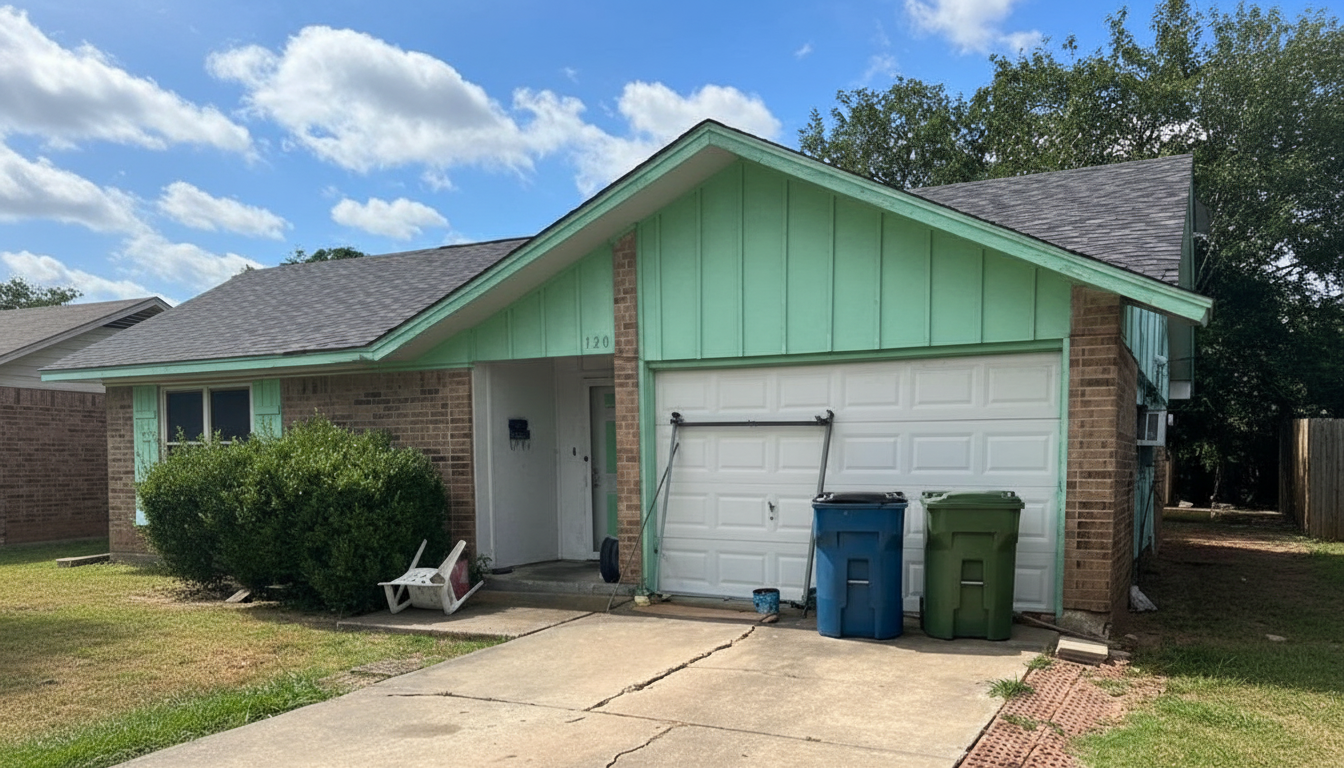
We Buy As-Is
Code Violations Making Your House Unsellable? We Buy It Anyway
Red tags, unpermitted work, city notices—traditional buyers run from these. We buy houses with code violations in California as-is. No permits, no contractors, no fines.
- We buy houses with red tags and unpermitted work
- No need to fix violations or pull permits
- Get out from under city deadlines and fines
How It Works
A simple, transparent process—no pressure at any step
Tell Us What's Going On
Complete our 2-minute form or give us a call. Share your situation—no judgment, just understanding.
We Review Your Property
Send photos or schedule a brief walkthrough. We look at records and ask a few clarifying questions.
You Get an Options Report
Not just a number—a clear breakdown of your paths forward with real net-to-you figures.
Choose Your Closing Date
If it fits, pick the timeline that works for your life. We handle all the paperwork and logistics.
You can say no at any point. No pressure, no obligations.
Real Situations. Real Outcomes.
Situation: Unpermitted garage conversion, city demanding removal or expensive retrofit
Timeline: Closed in 14 days
Outcome: We purchased as-is. Seller avoided $45k+ in remediation costs. We handled the city process after closing.
Situation: Vacant property sitting empty 2+ years, accumulating taxes, insurance, and vacancy notices
Timeline: Closed in 16 days
Outcome: Seller stopped the bleeding on carrying costs. We took it as-is, handled cleanup, and closed fast.
Situation: Inherited property with decades of unpermitted additions and no clear permit history
Timeline: Closed in 18 days
Outcome: Title cleared, heirs received fair price despite the complexity. No permit research required by seller.
What We Handle
- Properties with open code violations and citations
- Red-tagged or condemned properties
- Unpermitted additions, conversions, and modifications
- Long-vacant homes with deferred maintenance
- Fire, safety, and habitability violations
- Properties accumulating vacancy taxes or fees
- Properties with unclear permit history
What We Don't Do
- Pressure tactics or hard sells
- Hidden fees or surprise costs
- Bait-and-switch offers
- Rushing you into decisions

Common Questions
Code violations, vacant properties, and permit issues involve complex local regulations. The information above is general in nature. Please consult with a local real estate attorney or permit specialist for advice specific to your situation and jurisdiction.
Get My Written Offer
See your real numbers—no obligation, no pressure
Prefer to talk now?
If the red tag followed a fire, read how to sell a fire-damaged house in California.